2023
As the final project for a university course focusing on software development, we created a prototype of a mobile app that helps control one's energy usage. The app was required to meet the requirements given in an imaginary client brief.
Our team consisted of four people. Aside from requirements gathering and documenting, I was responsible for Figma prototypes and designing the overall user experience.
Usage environment and users
The primary end users of the SÄSÄ (Sähkön Säästö Appis) application were defined as customers who have purchased TÖRKKELI smart plugs and want to control them via a mobile app. These users can be either private individuals using the product at home or businesses aiming to improve energy efficiency in their facilities.
The system is maintained by administrators and supported by technical staff. Continuous maintenance ensures the application remains up to date, secure, and responsive to potential issues. The product also integrates with external APIs, requiring secure and reliable connections.
While end users are expected to have basic mobile skills, guidance is available when needed. The interface is designed to be clear, intuitive, and accessible, with potential support for multiple languages.
Outcome
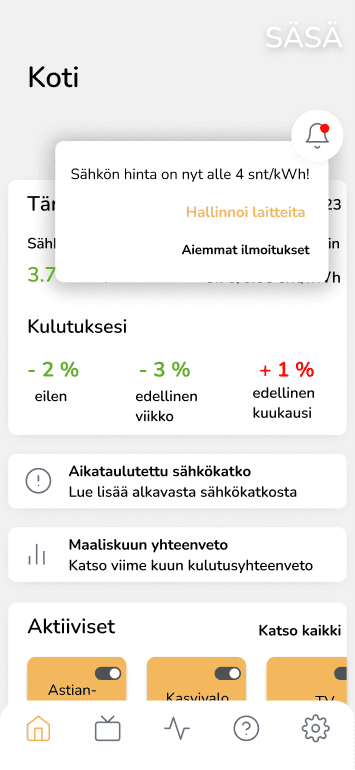
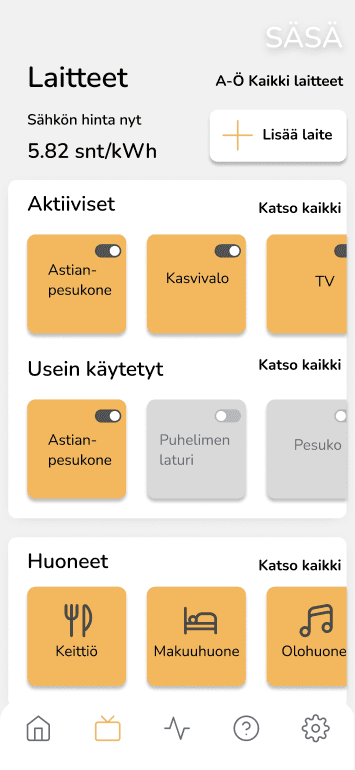
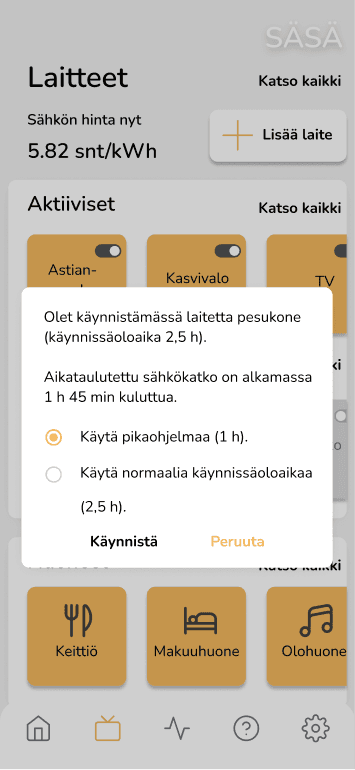
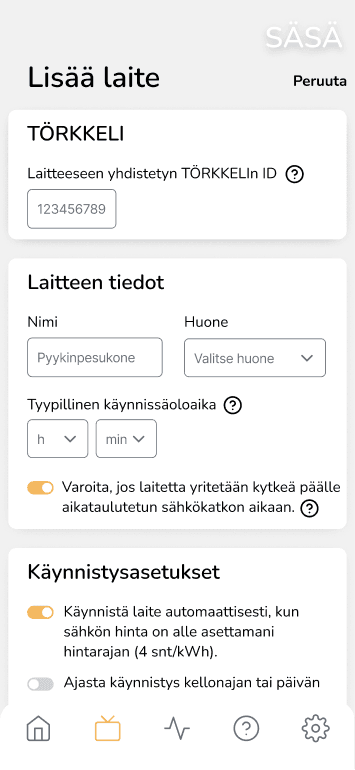
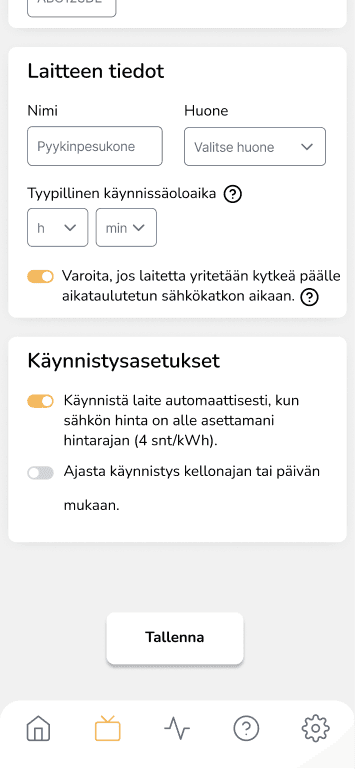
SÄSÄ is a mobile application designed to remotely control smart plugs (“TÖRKKELIs”) in a user’s home or similar environment. The app allows users to monitor and manage their connected devices from anywhere via their phone or other mobile devices. Through SÄSÄ, users can control when individual smart plugs receive power, helping optimise electricity usage and reduce costs. Multiple devices can be connected and named within the interface for easy identification.
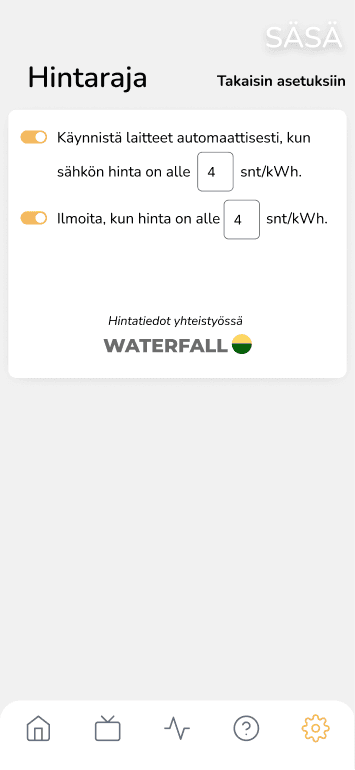
To support energy-saving decisions, the app provides real-time electricity market prices and hourly spot price data. This enables users to schedule or manually control devices based on price fluctuations. The app also includes smart notifications, alerting users when electricity prices fall below a defined threshold. Additionally, automation features, such as automatically turning devices on at favourable price levels, enhance usability and convenience.
Key learnings
The project gave me insight into designing services based on the findings of diverse research methods (e.g. PESTE, stakeholder and competitor analyses) and helped me develop skills in requirements gathering. I also strengthened my project management skills while working on this project.