2023
The objective of this university course project was to come up with a new concept that would help cut food waste among university students. The service should not be too time-consuming or difficult to use in the busy student life.
Our team consisted of three people. My responsibilities included user interviews and their in-depth analysis, desktop (also some mobile) user interface designs, and Figma prototypes.
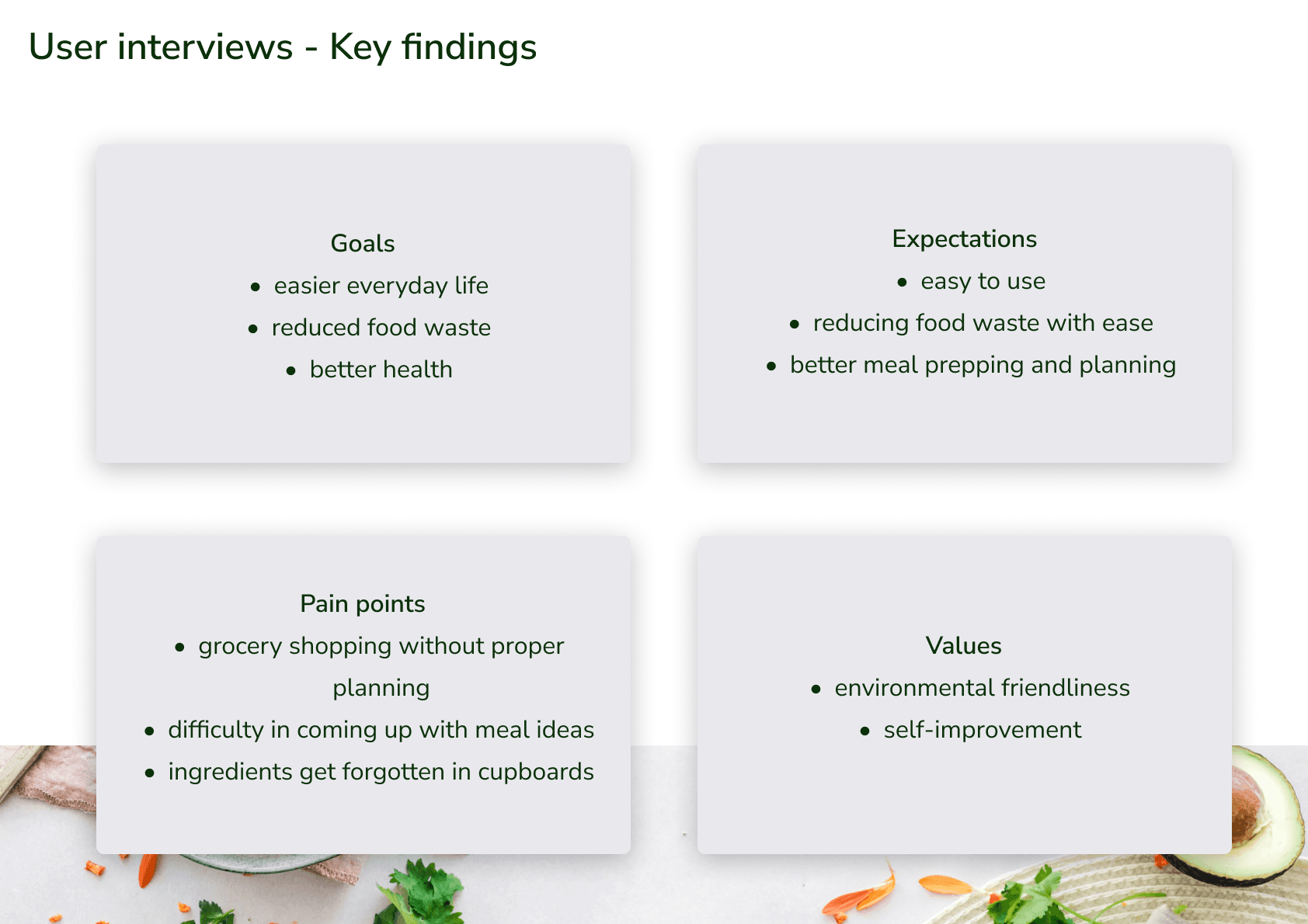
User research
We conducted three remote user interviews to gain insights into our target audience. All interviewees were women living alone and university students, matching our target group. We did not limit the target group based on gender, but all participants happened to be female. The participants studied different fields and were at different stages of their studies. In our view, the field of study and stage of studies were not relevant to the research and do not affect the definition of our target group.
Outcome
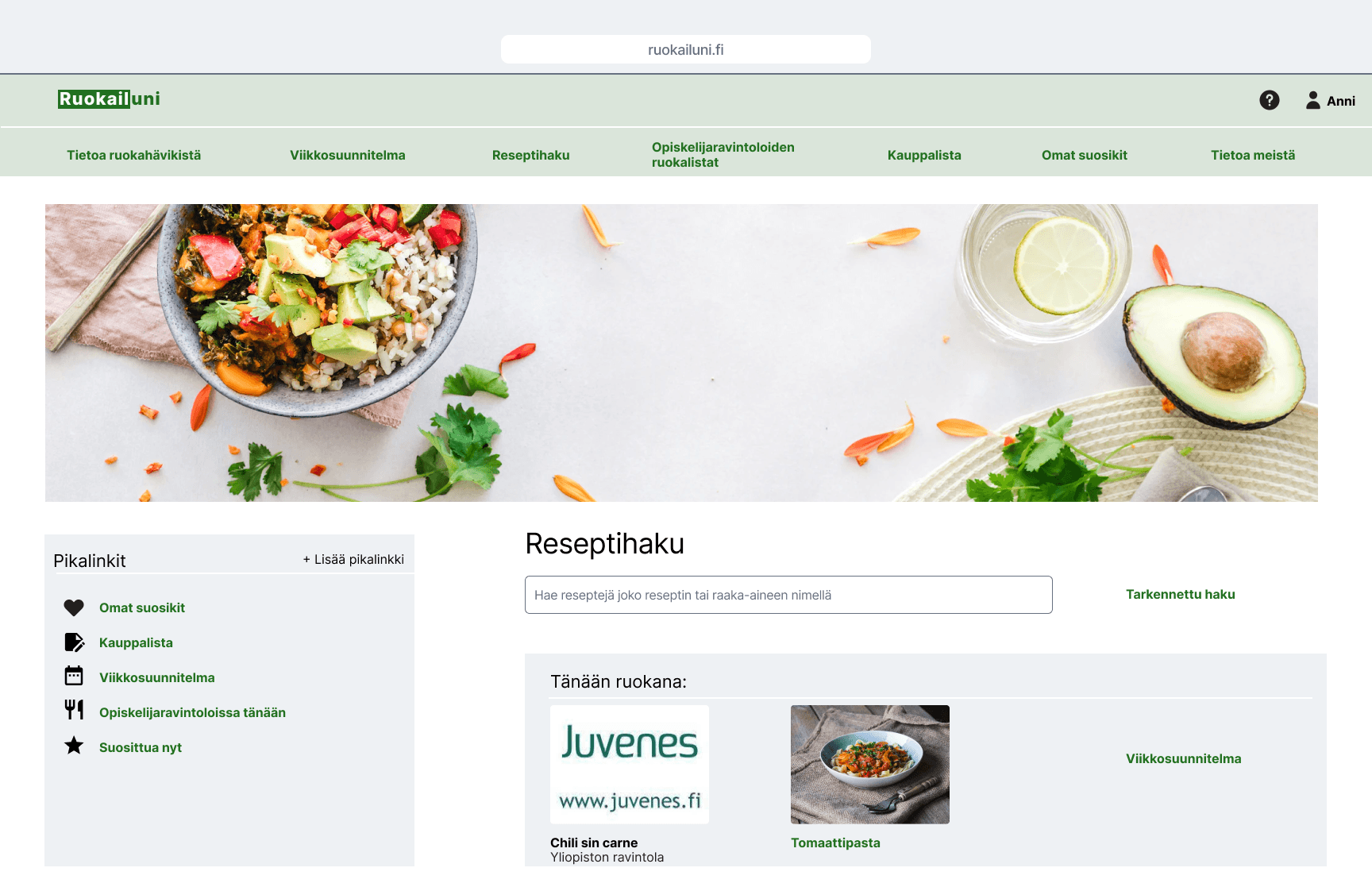
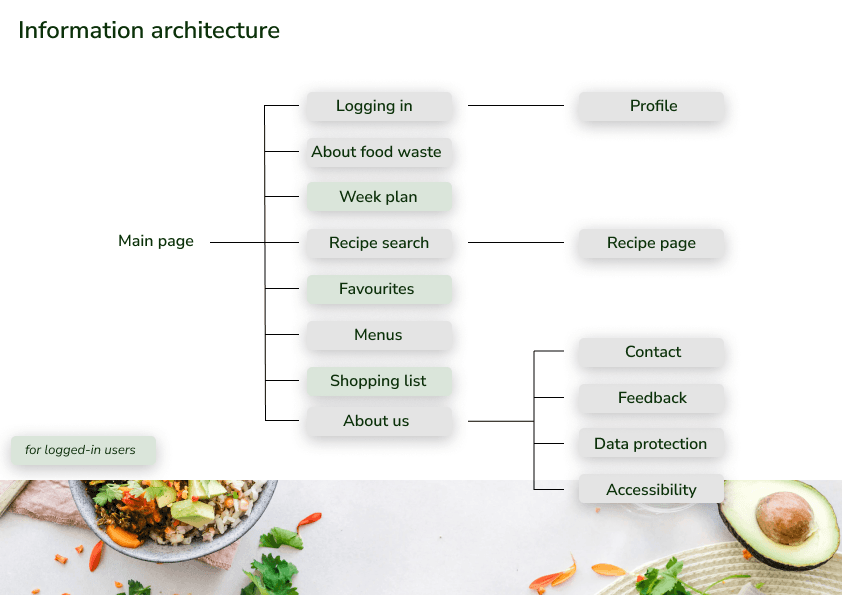
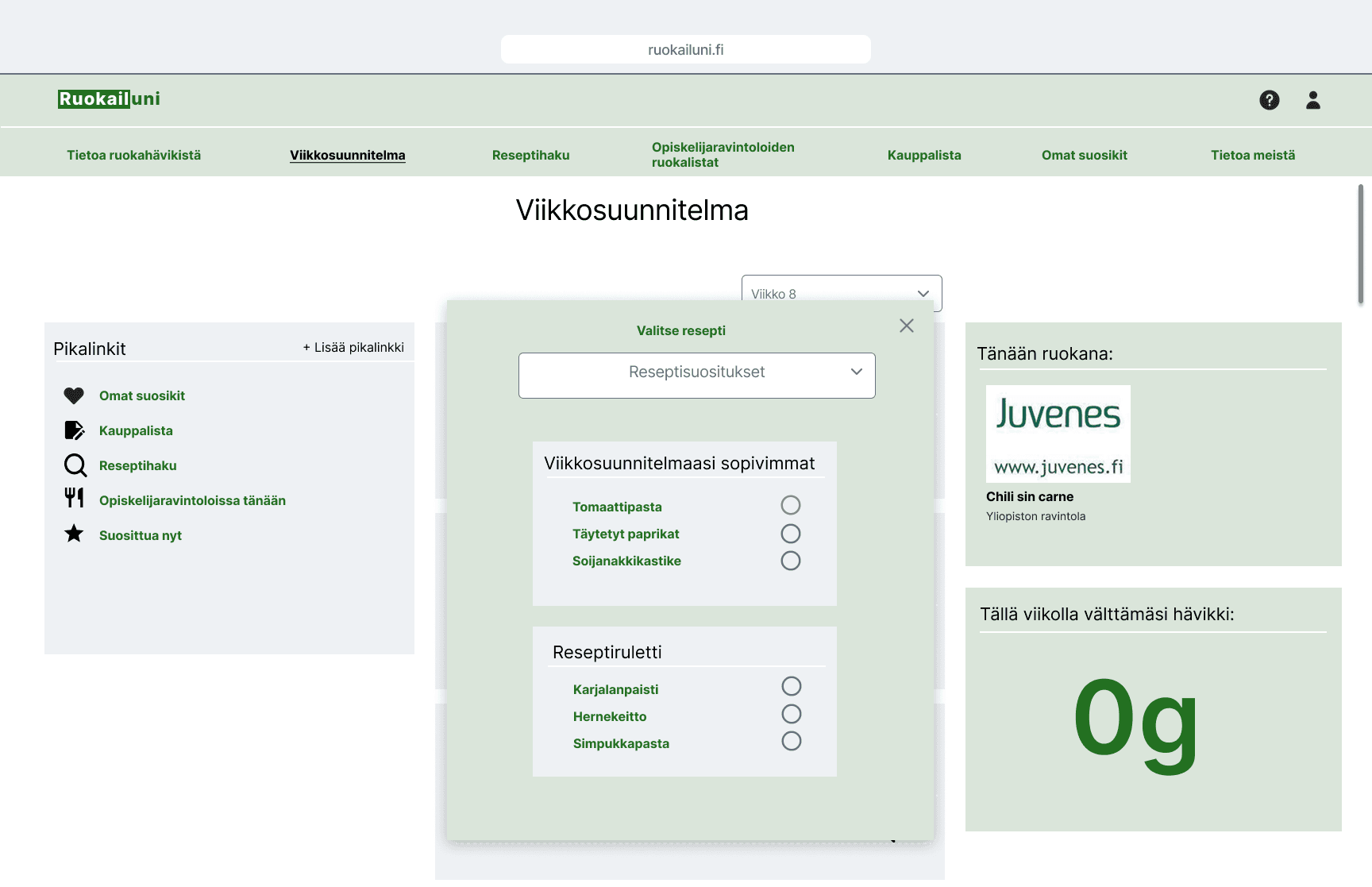
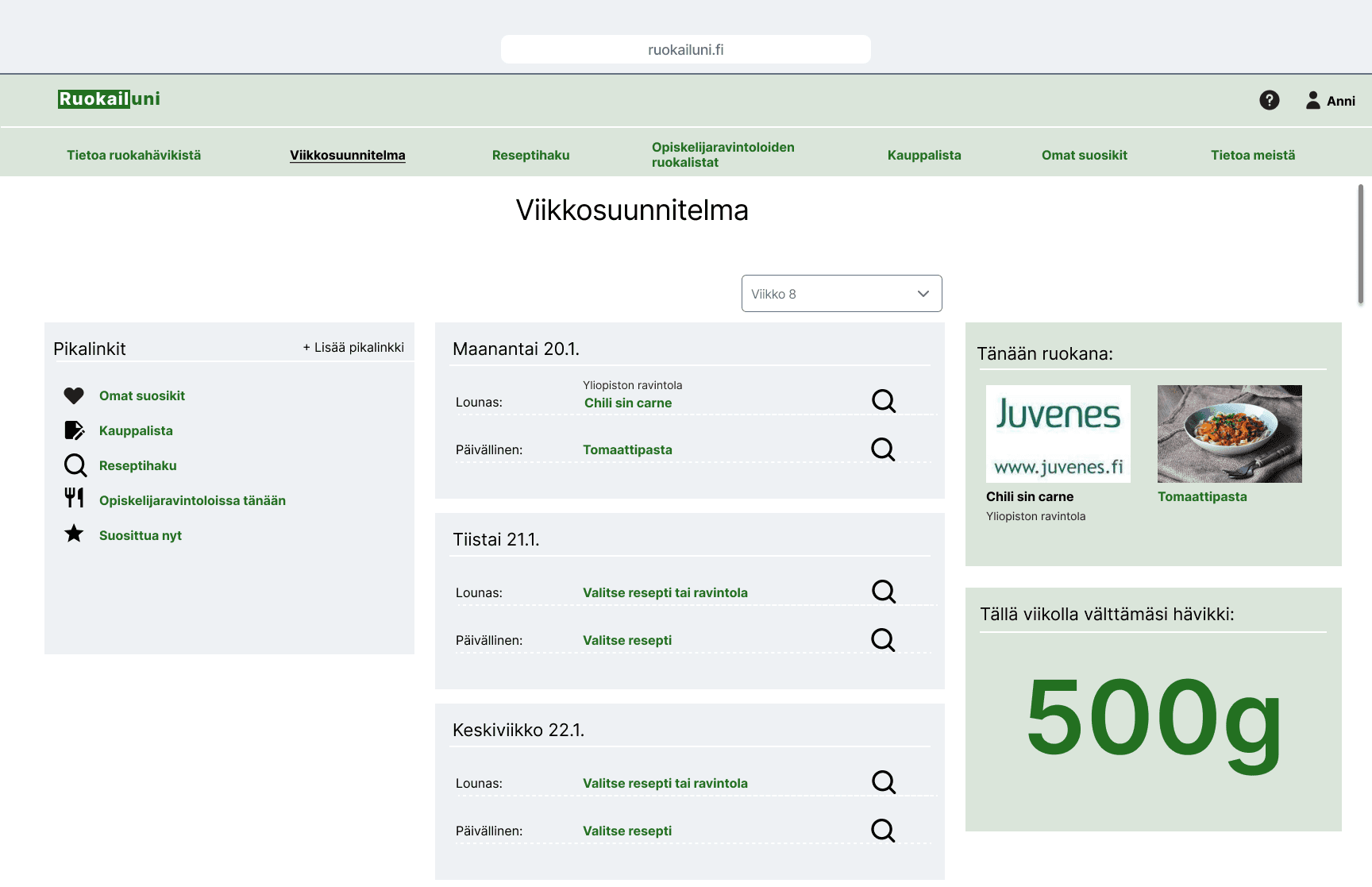
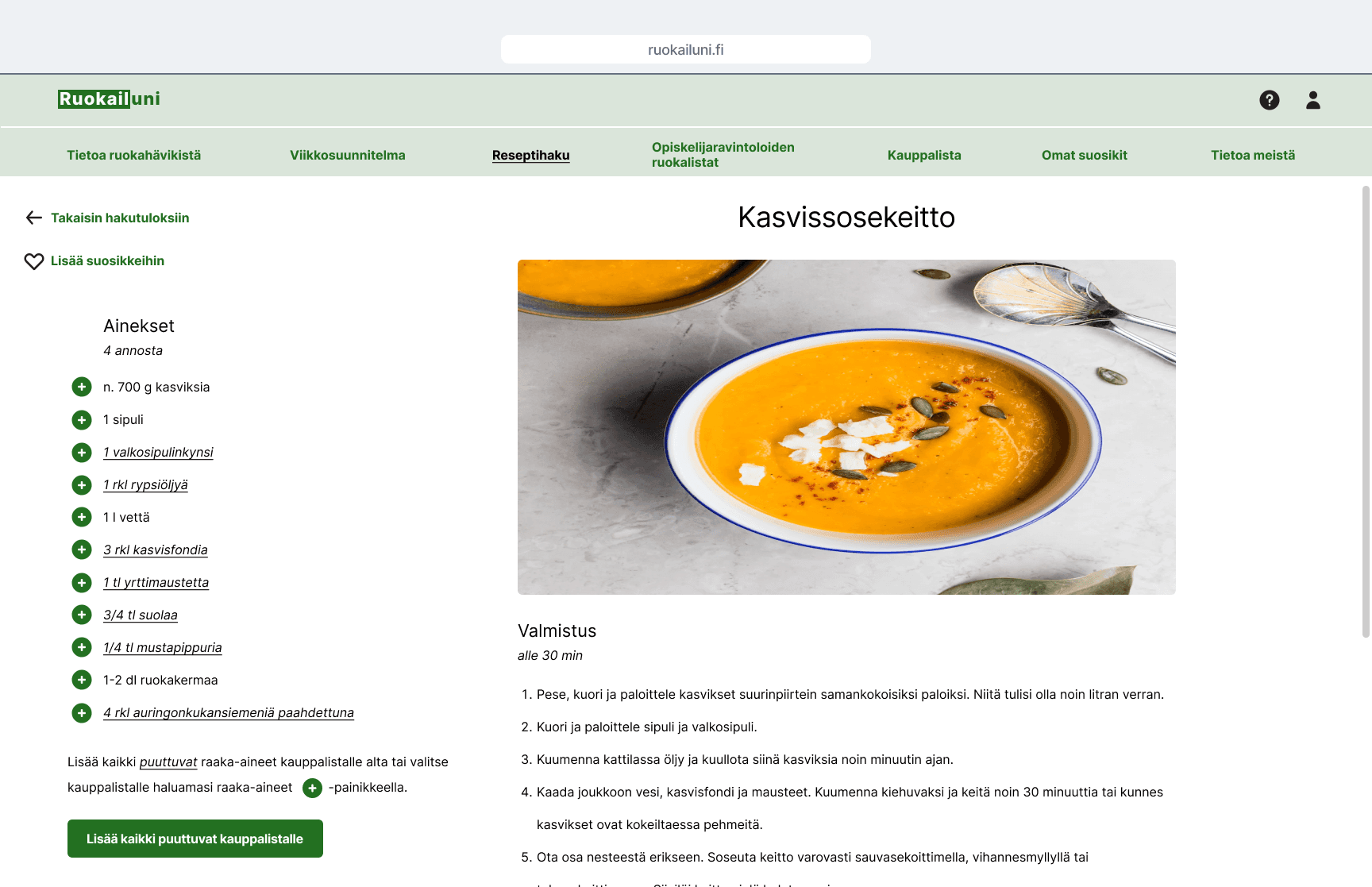
We designed a web service that helps users plan their weekly meals based on the ingredients they already have at home. Users can search for recipes, create a weekly meal plan, and add missing ingredients directly to a shopping list.
The service also integrates university restaurant menus, allowing users to plan meals both at home and on campus. By combining these options in one place, the service supports more organised, flexible, and forward-thinking meal planning.
Key learnings
The project made me a more confident Figma user and it taught me a lot about wireframing. Conducting user interviews helped me to understand how real user needs might differ from designers’ initial thoughts, and how these should be considered. I also gained valuable experience of collaborating in a design project.
Design sandbox
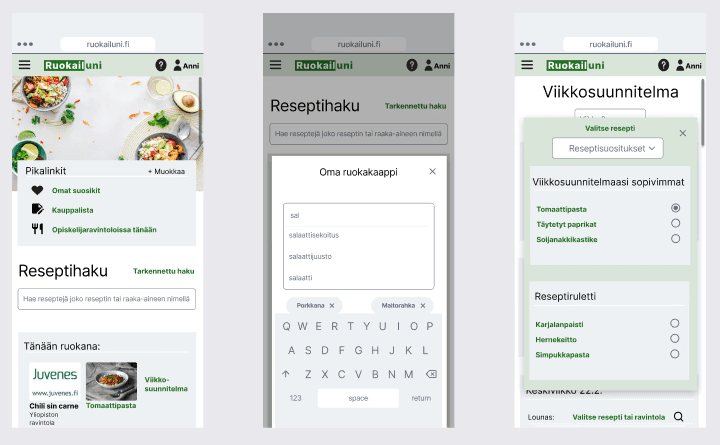
Some mobile screens
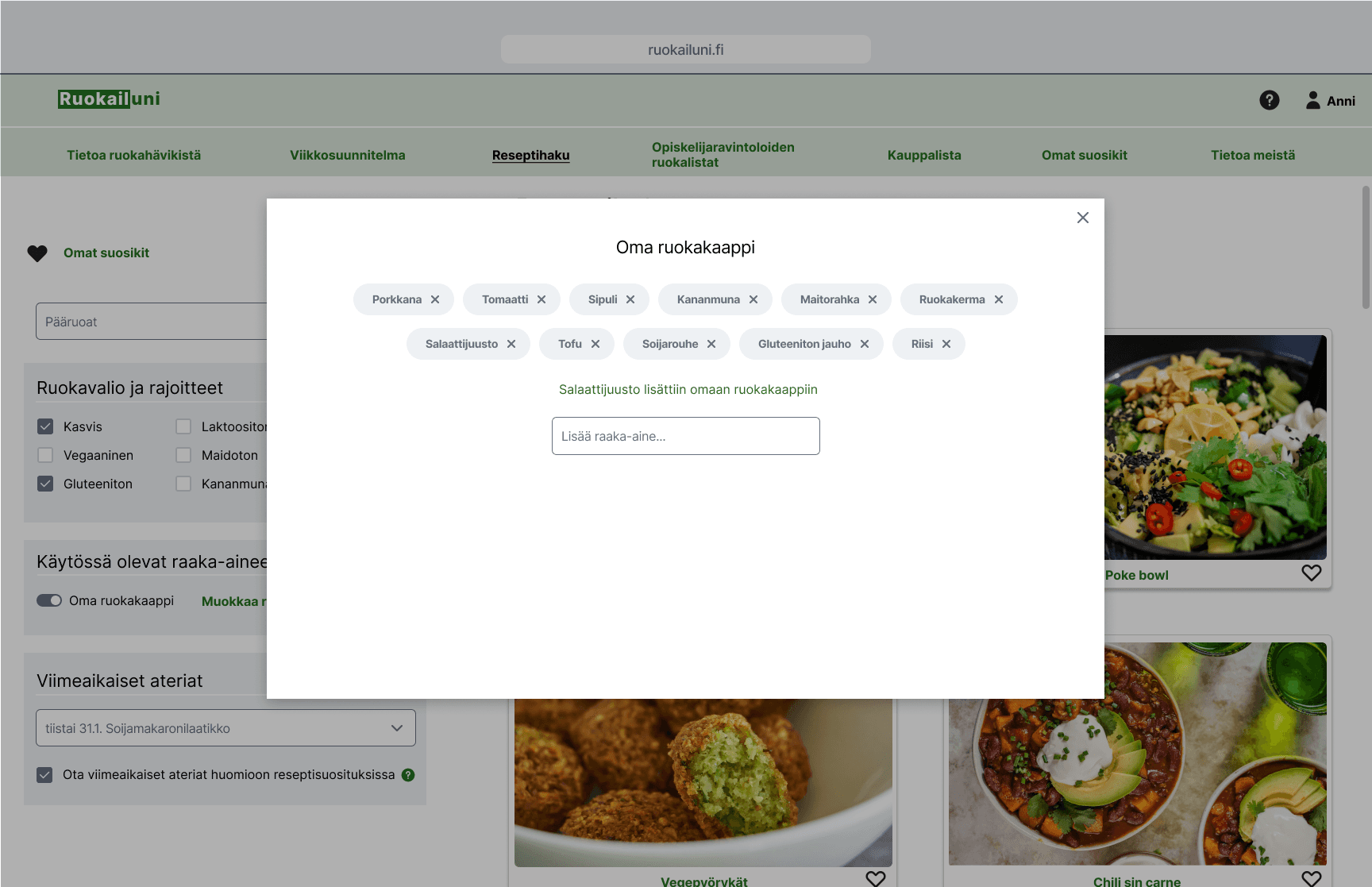
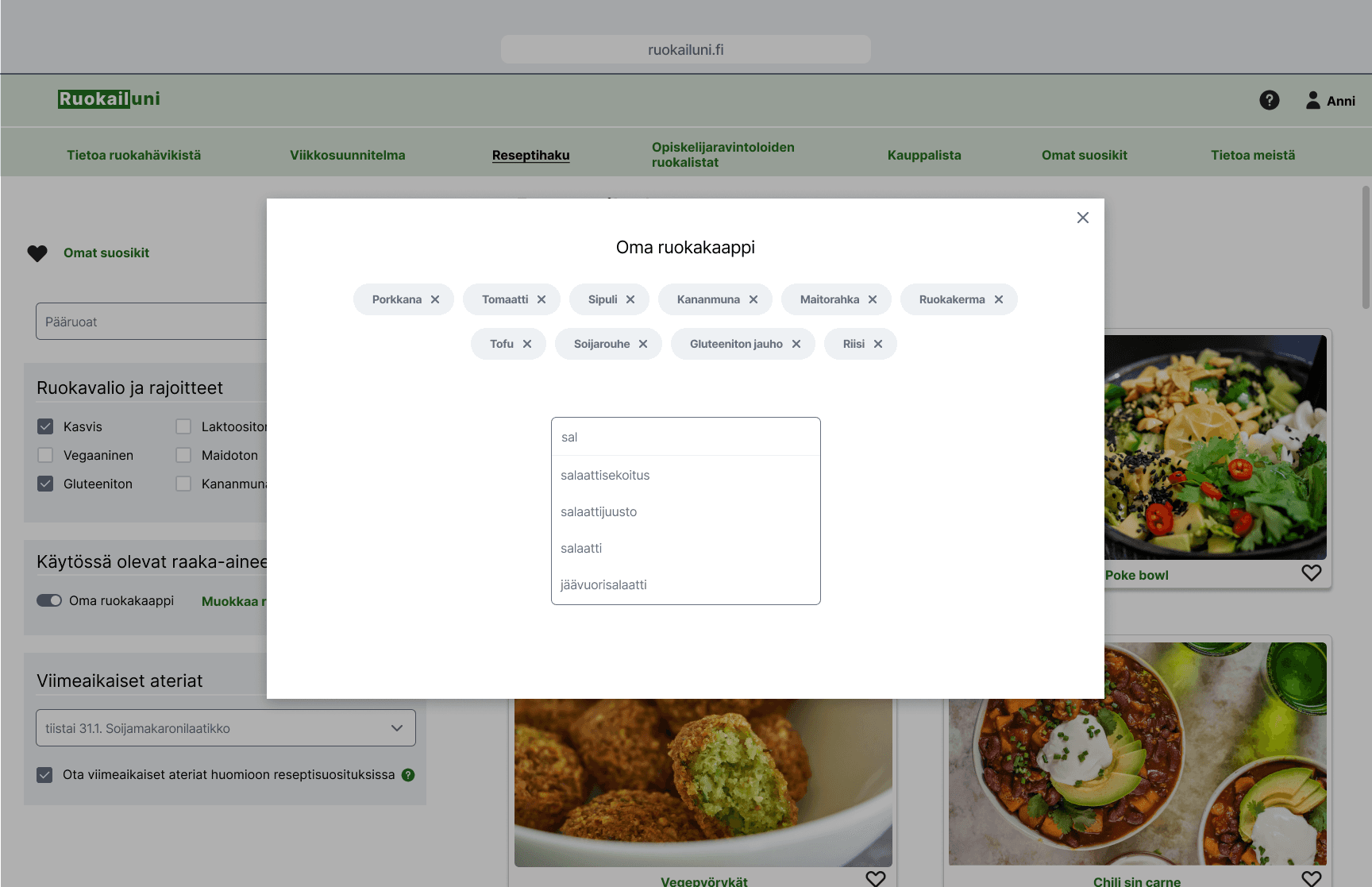
The process of adding products to one's "storage" which contains items that are currently available to the user for cooking
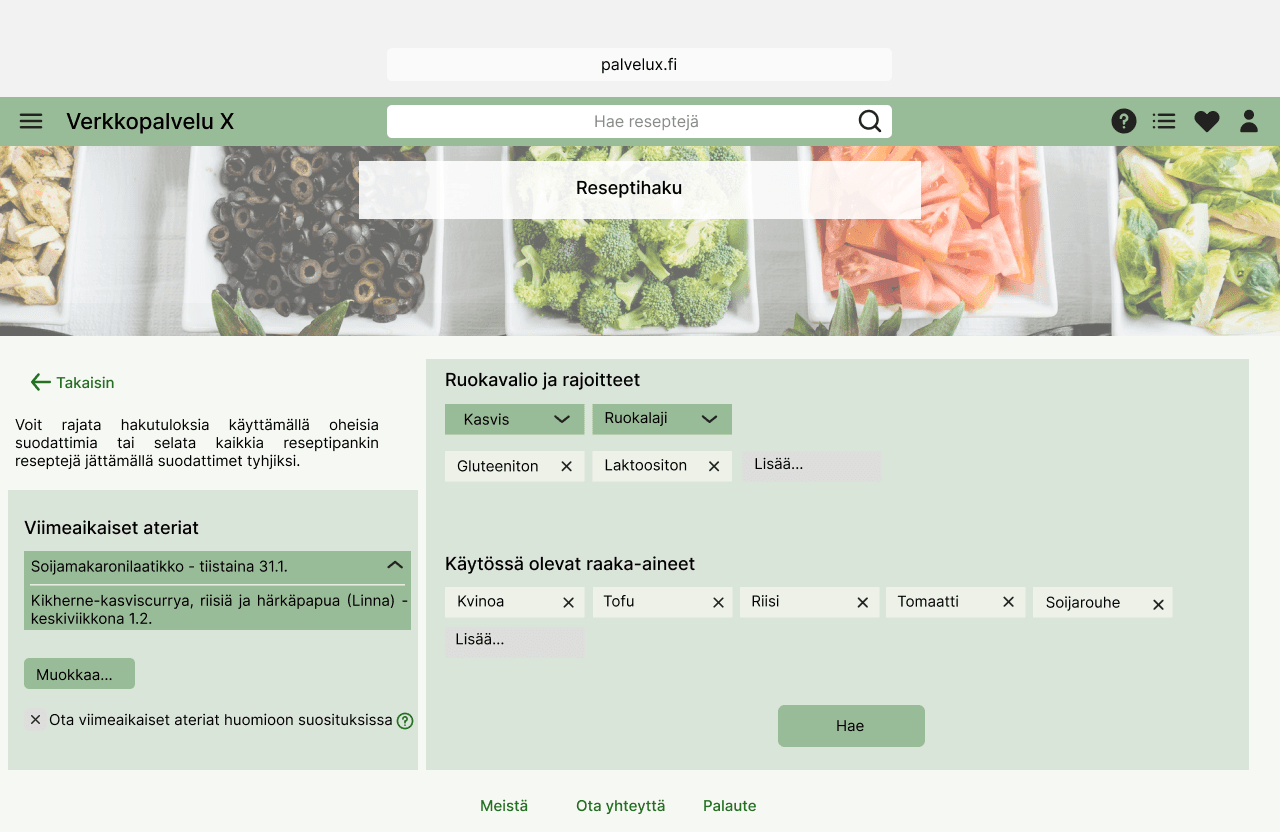
An earlier version of the design